Villa MT
Light, shadows, vistas
LOCATION. nové mesto nad váhom, slovakia
GROSS FLOOR AREA. 315sqm
YEAR. 2021
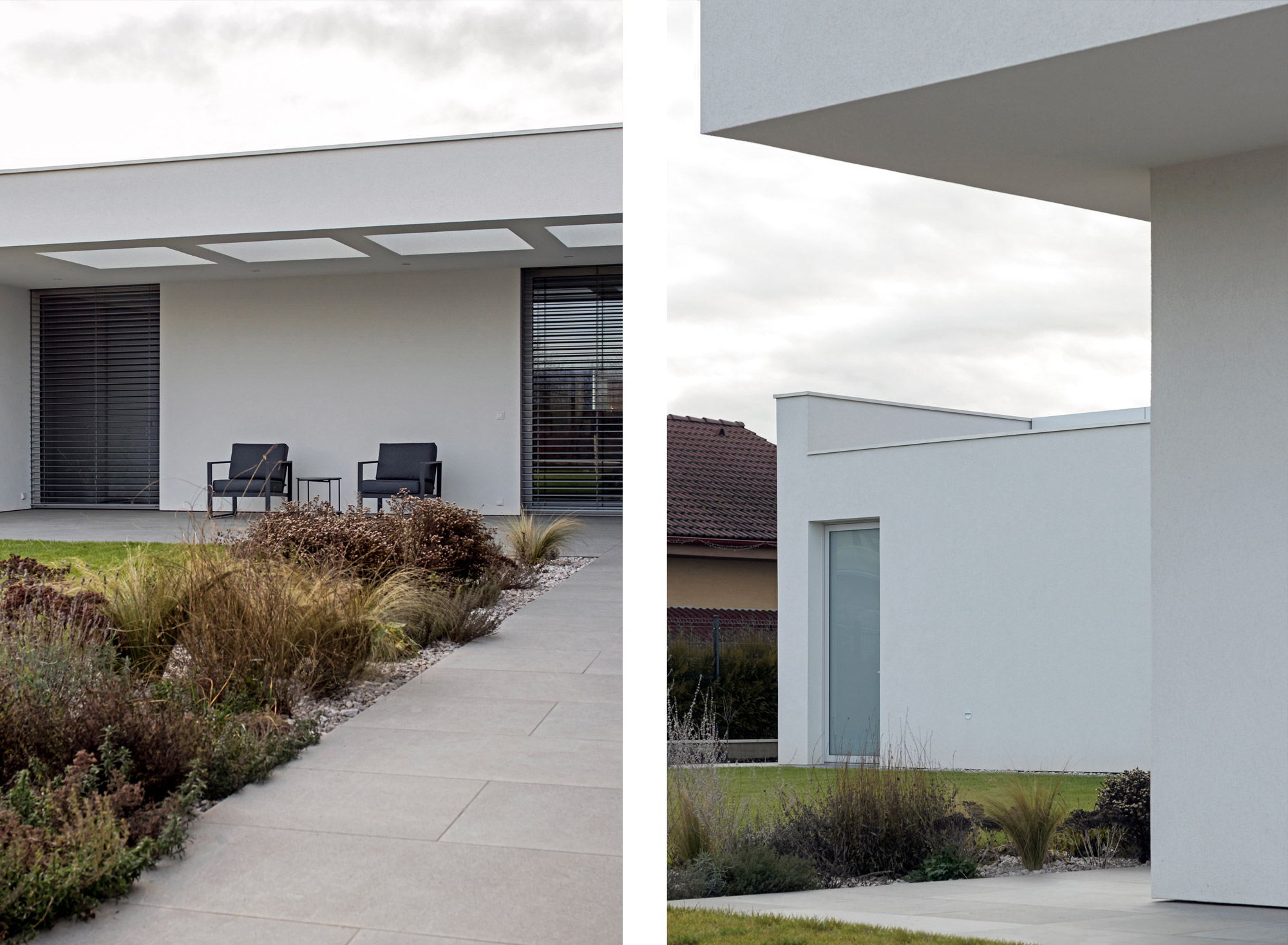
The MT family villa is located on the western edge of Nové Mesto nad Váhom, in an ordinary, rapidly developing residential area with loosely defined building regulations. The intention was not to blend in with or respond to the (un)established qualities of the surroundings. Instead, the aim was to design a house that offers high-quality living, architectural and material clarity, an appropriate scale, and a forecourt that does not serve only its users behind a high fence. The semi-open forecourt, beneficial not only to the residents of the house but also to the adjacent street space, even if currently only as a small contribution to a larger whole, forms an integral part of this approach.
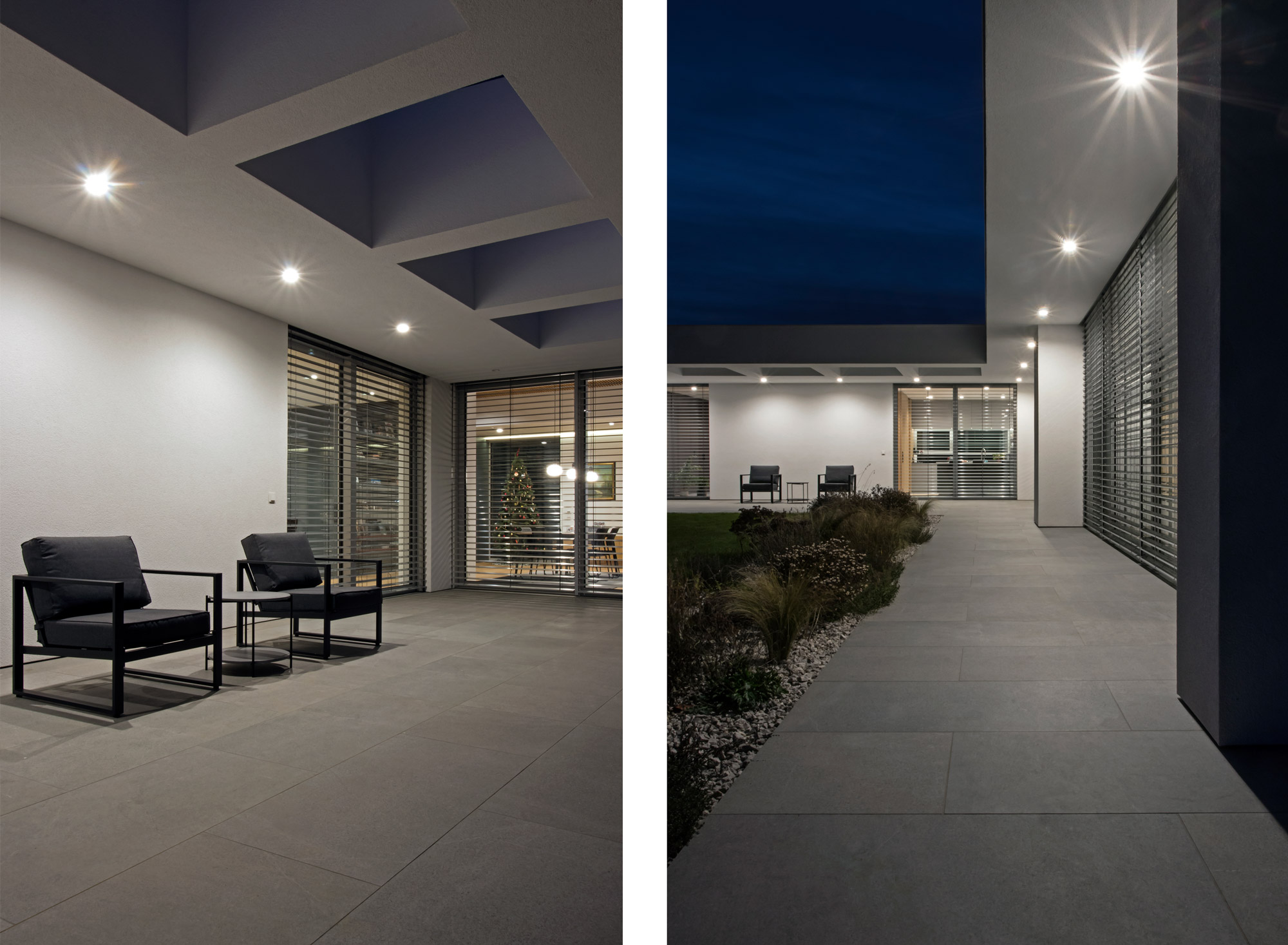
The front courtyard, largely shaped by a pronounced interplay of volumes and by the unifying element of the roof overhang, is conceived as an independent outdoor room and acts as a visual and experiential extension of the interior.
The single-storey layout is based on the programme defined by the client. Through its volumetric arrangement, it creates attractive visual relationships and sightlines between individual functional zones.
Functionally, the house is divided into four zones: a double garage with a workshop and technical facilities; an entrance zone with kitchen; a living area with dining space, followed by an ensuite master bedroom; and a zone of two rooms with a bathroom for children or grandchildren. This latter zone is deliberately oriented so that, if unused, it can be disconnected from heating or cooling without a significant impact on overall comfort.
The house is composed of two main volumes—the garage and the residential volume—interconnected by a third volume containing the entrance hall, corridor, and kitchen bay. A key architectural element is the ceiling slab itself. The compositional play—where the slab is at times embedded within the volume, at other times supported by a travertine wall, or lightened by a large skylight—references and paraphrases our favoured mid-century architecture, particularly the works of Mies van der Rohe and Richard Neutra. The cantilevered ceiling slab unifies all volumes, creates purposeful sheltered outdoor areas, and gives the house a distinct horizontality. Despite the limited number of window openings facing the street, the street façade retains a dynamic character through its varying depths, interplay of shadows, and visual connections. Towards the garden, a fully glazed sliding façade opens the house to the exterior, with the cantilevered ceiling slab extending above to filter sunlight and shield the interior from excessive heat. This overhang, in combination with the glazed façade and the adjoining terrace, generates an additional outdoor living space that significantly expands the usable living area of the interior, especially during warmer days.